APIs are the foundation of every Salesforce integration. Whether you are connecting Salesforce to an ERP, building a customer app, automating workflows, or syncing data across cloud platforms, your API choice will directly impact performance, scalability, and long-term reliability.
In 2025, most modern systems are shifting toward lightweight, cloud-native architectures. However, enterprise environments still depend on structured, contract-based communication. This creates an essential question for businesses and developers:
Should you use Salesforce REST API or SOAP API?
This detailed guide breaks down both options, compares their performance and security, and helps you choose the right approach for your Salesforce integration in 2025.
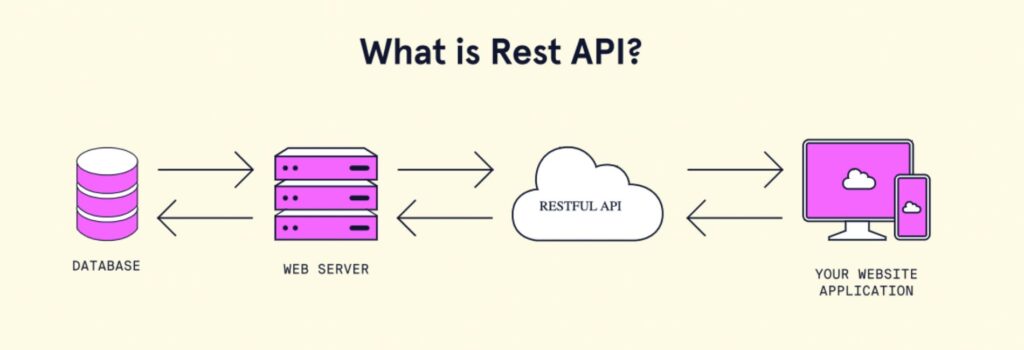
Salesforce REST API (Representational State Transfer) is a modern, lightweight API that uses JSON format to exchange data. It is designed for easy integration, fast performance, and scalable communication.

• Lightweight and fast
• Uses JSON format
• Easy to develop and maintain
• Ideal for mobile and web integrations
• Stateless communication
• Uses OAuth 2.0 for authentication
• Designed for modern cloud-native architectures
• Lightweight and fast
• Uses JSON format
• Easy to develop and maintain
• Ideal for mobile and web integrations
• Stateless communication
• Uses OAuth 2.0 for authentication
• Designed for modern cloud-native architectures
Also Read: Everything You Need to Know About The Salesforce API Integration
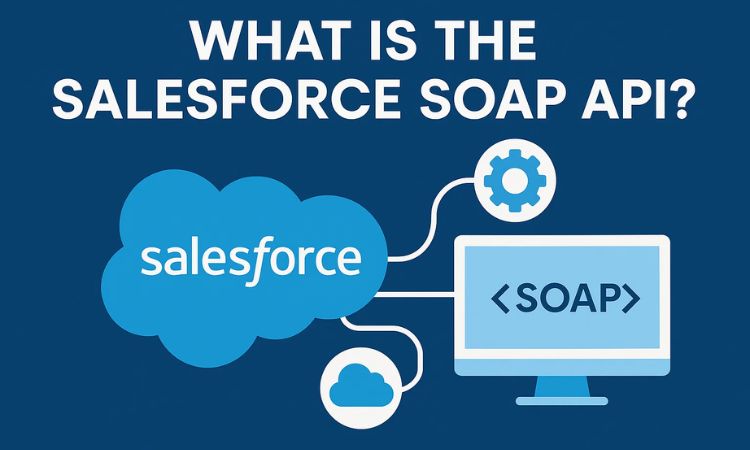
Salesforce SOAP API (Simple Object Access Protocol) is a structured, XML-based protocol commonly used for enterprise-level communication. It is more rigid than REST but offers stronger message-level security and predictable data structures.

• Uses XML format
• Strong schema with WSDL contract
• High reliability for mission-critical processes
• Supports WS-Security
• Ideal for legacy system integration
• Provides strict data validation
• Best for large-scale backend operations
• Integrations with SAP, Oracle, Mainframe
• Healthcare, banking, insurance system integrations
• Government or compliance-sensitive environments
• Large structured data transfer
• Backend-to-backend system communication
Also Read: Mulesoft AsyncAPI Support to Help AI-Powered Customer
Fea ture | REST API | SOAP API |
Format | JSON | XML |
Speed | Fast and lightweight | Slower but more structured |
Complexity | Easy | Complex |
Security | OAuth 2.0 | WS-Security |
Scalability | High | Moderate |
Use Cases | Cloud and mobile apps | Enterprise systems |
Flexibility | High | Medium |
Data Volume | Small to medium | Medium to large |
Development Effort | Low | High |
Overall, REST leads in performance for modern applications, while SOAP excels in enterprise-grade reliability.
Both APIs are secure, but they offer different levels of security.
REST API Security
SOAP API Security
If your business requires strict validation and encryption at the message level, SOAP is the safer option.
Also Read: Salesforce Policy Development Kit: Customize API Security with Ease
REST API is recommended when your integration requires:
REST is ideal for startups, SaaS companies, e-commerce, marketing automation, and IoT use cases.
Although REST is widely used for modern integrations, SOAP API remains essential for businesses where security, structure, and compliance are non-negotiable.
SOAP is the better choice in the following scenarios:
1. Integrating with Legacy Enterprise Systems
Systems such as SAP ECC, Oracle EBS, IBM Mainframe, and older ERPs often rely on SOAP-based communication. SOAP ensures predictable, structured, and secure data exchange.
2. High-Security, Strict Validation Requirements
Industries like banking, insurance, healthcare, aerospace, and government require message-level security, XML validation, and encrypted communication. SOAP provides these capabilities through WS-Security.
3. Formal WSDL-Based Contract Requirements
SOAP uses a WSDL file that defines strict data schemas. This is beneficial for large enterprises where integration must follow consistent standards.
4. Large-Scale Structured Data Migration
SOAP is suitable for transmitting large and highly structured datasets. Its rigid schema ensures no data loss or inconsistencies during complex migrations.
5. Complex Backend-to-Backend Communication
SOAP works well for multi-step workflows, financial reconciliation, backend processing, and high-trust transactional systems.
6. Compliance-Focused Environments
If your systems must comply with HIPAA, GDPR, PCI-DSS, SOX, or similar regulations, SOAP API remains the recommended approach.
SOAP may not be lightweight, but it is unmatched in reliability, consistency, and enterprise-grade security.
A simple breakdown:
Use REST API if you need:
Use SOAP API if you need:
REST API will continue to be the preferred choice for most Salesforce integrations due to its speed, scalability, and simplicity.
However, SOAP API remains essential for regulated industries, legacy system dependencies, and mission-critical enterprise processes.
Most organizations benefit from using both APIs depending on the use case.
CloudMetic helps businesses design integration solutions that are secure, scalable, and aligned with long-term business goals. With experience across REST API, SOAP API, Apex callouts, and middleware solutions, CloudMetic ensures seamless communication between Salesforce and external systems.
Whether you are integrating modern cloud applications or connecting legacy enterprise systems, CloudMetic helps you build a future-ready solution.
Explore Salesforce Integration Services at CloudMetic.
REST API and SOAP API both play important roles in the Salesforce ecosystem. REST enables fast and flexible cloud integrations, while SOAP provides the security, structure, and reliability required for enterprise-grade communication.
Your choice depends on system requirements, performance expectations, data structure, and security standards. In 2025, REST leads in modern architecture, but SOAP remains irreplaceable for legacy and regulated systems.
Selecting the right API is not just a technical decision; it impacts your business scalability, data accuracy, and long-term integration success.
1. Is SOAP API outdated in 2025?
Ans: No. SOAP remains essential for industries requiring high security, structured XML communication, and integration with legacy enterprise systems.
2. Is the REST API faster than SOAP API?
Ans: Yes. REST uses JSON and lightweight architecture, making it faster for most modern applications.
3. Can I use both REST and SOAP in Salesforce?
Ans: Yes. Many organizations adopt a hybrid integration model depending on use cases.
4. Which API is recommended for mobile applications?
Ans: REST API is the preferred choice for mobile and web applications due to its speed and lightweight structure.
5. Which API does Salesforce recommend in 2025?
Ans: Salesforce recommends REST for most new integrations but fully supports SOAP for enterprise and compliance-heavy environments.
A testimonial is a window into the experiences of our clients and partners who've worked with us. Here, we share their feedback on how CloudMetic's solutions, approach, and support have made a real difference.
Locations
No matter your business size, needs, or payments infrastructure, our expert team can help.